

The journey to
Nikumaroro
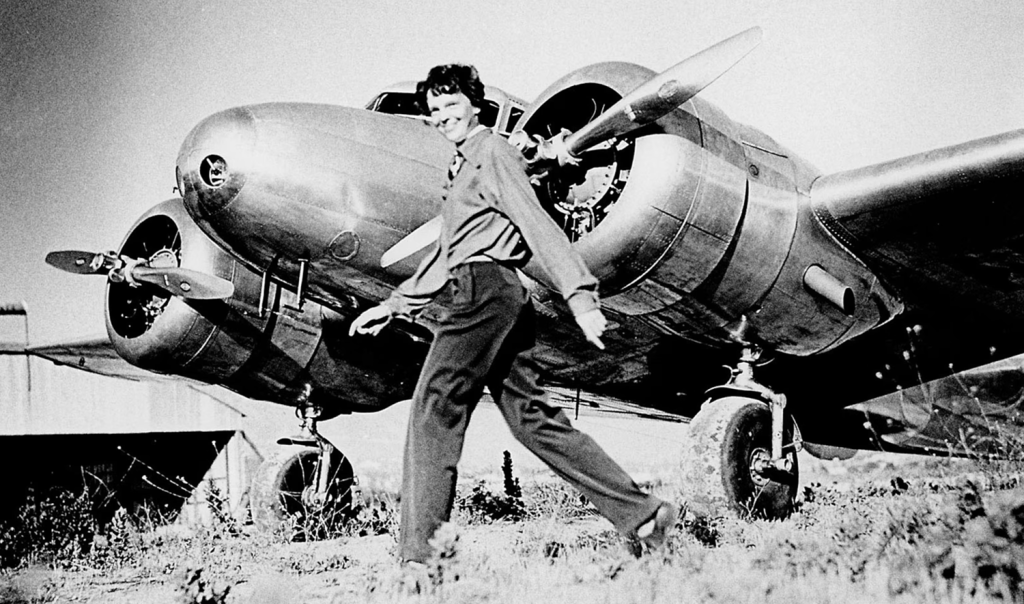
The Electra, which disappeared on July 2, 1937, has never been recovered, but a vast amount of circumstantial evidence has been amassed, largely by The International Group for Historic Aircraft Recovery over nearly 40 years, supporting the Nikumaroro hypothesis. This idea posits that Earhart and her navigator, Fred Noonan, did not crash at sea but instead landed and were marooned on an uninhabited island and subsequently perished there.
The hypothesis, as updated by ALI with new evidence for the Taraia Object, is based on documentary records, photographs and satellite images, physical evidence, and personal testimony, including these highlights:
- Radio bearings recorded from radio transmissions at the time by the U.S. Navy, the U.S. Coast Guard and Pan American World Airways, which converge on Nikumaroro
- A 2017 analysis of human bones discovered on the island in 1940, which determined Earhart’s bone lengths were more similar to the discovered bones than 99% of individuals, strongly supporting the conclusion they belong to Earhart
- Artifacts including a woman’s shoe, a compact case, a freckle cream jar and a medicine vial — all dating to the 1930s
- The Bevington Object, a photographic anomaly captured just three months after the plane’s disappearance, which appears to represent one of the Electra landing gear on the Nikumaroro reef
- The Taraia Object, located in 2020, which has been in the same place in the lagoon since 1938
A once-in-a generation moment.
"*" indicates required fields